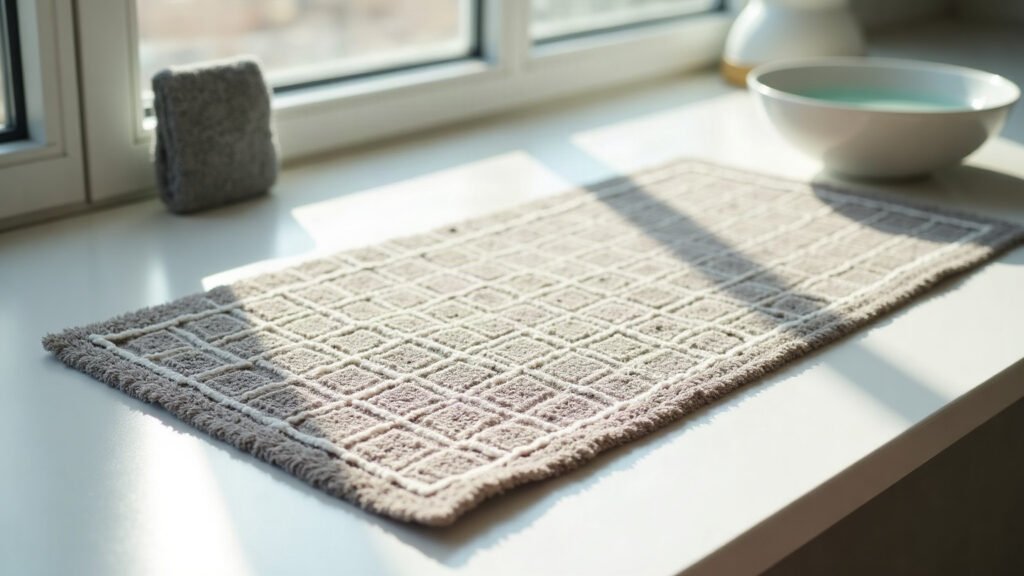
Cold water, a pea-sized drop of basic dish soap, and a soft microfiber cloth will clean ninety percent of printed fabric desk mats without stripping the ink or lifting the stitched edges.
Look down at where your wrists sit right now. There is likely a faint, grey sheen along the bottom third of the fabric, right where bare forearms rest for eight hours a day. That haze is a mixture of skin oils, shedding dead cells, and fine household dust. Left alone, those lipids oxidize inside the polyester weave. They turn sticky, attract pet hair, and create micro-abrasions that wear down your mouse glides.
The first week after a proper wash, you will catch yourself glancing down just to see the original contrast back on your desk. The blacks look deep again. Your mouse sensor stops picking up phantom drag across the tracking zone. You do not need dedicated carpet foam, harsh spot removers, or a washing machine to get it there.
The Chemistry of Print Damage: What Actually Ruins a Mat
Before you run warm tap water over your mat, you need to understand how the artwork got into the fabric in the first place.
Most illustrated fabric mats use dye-sublimation. Heat turns solid dye into a gas, bonding it permanently with polyester synthetic fibers. The ink does not sit on top like vinyl or screen-printing; it becomes part of the fiber itself. That makes it durable against friction, but vulnerable to specific chemicals and high heat.
- Hot water: Temperatures above 40 degrees Celsius (104 Fahrenheit) can soften synthetic binders, open polyester fibers, and release dye molecules. Always wash cold.
- Bleach and oxidizers: Detergents containing oxygen-based brighteners break down pigment compounds. Your rich navy blues turn dull grey.
- Direct heat sources: Radiators, hair dryers, and tumble dryers melt the non-slip natural rubber backing underneath the cloth. Once rubber delaminates or warps, it never lays flat on a desk again.
- Stiff bristles: Nylon scrub brushes shear the microscopic polyester loops, creating a fuzzy, pill-covered texture that traps grime even faster.
The Safe Wash Method: Step-by-Step
You need three household items: mild, clear liquid dish soap, lukewarm-to-cold water, and two clean microfiber cloths. Work in a clean bathtub or large sink basin.
Step 1: The Dry Lift
Never wet a dusty mat immediately. Water turns loose dust into mud that sinks straight to the rubber base. Unplug your peripherals and lift the mat. Take it outside and tap the back firmly several times. Use a sticky lint roller or a dry microfiber towel to sweep away loose debris, keyboard crumb fallout, and pet hair across the surface.
Step 2: Submerge in Cold Water
Lay the mat flat in your tub or basin. Run cold water until the mat is fully submerged by an inch or two. Let it soak for five minutes. This loosens dried sweat salts without any friction required.
Step 3: Gentle Lather
Mix two drops of dish soap with a cup of cold water in a bowl. Do not squirt concentrated soap directly onto the mat print. Dip your microfiber cloth into the suds. Work across the fabric using light, circular motions. Pay extra attention to the edge where your wrist rests, but avoid scrubbing aggressively along the perimeter stitching.
Step 4: The Clean Rinse
Drain the soapy water. Run cold tap water over the mat until the runoff is completely clear of bubbles. If soap residue remains trapped in the dense weave, it attracts dust twice as fast once dry.
Cleaning Methods Compared
Different cleaning methods carry different risks for printed rubber-backed mats. Here is how standard household techniques compare:
| Cleaning Method | Risk of Print Fading | Risk of Edge Peeling | Drying Time |
|---|---|---|---|
| Cold hand wash (dish soap) | Zero | Zero | 12 to 24 hours |
| Washing machine (gentle cycle) | Low to moderate | High (spin cycle bends rubber) | 12 to 18 hours |
| Dishwasher cycle | High (heat degrades dye) | Extreme (backing warps) | Not recommended |
| Spot clean (alcohol wipe) | High (solvents dissolve inks) | Moderate | 5 minutes |
Drying Without Warping or Curling
Drying is where most people ruin their gear. When heavy natural rubber holds water, hanging it by clothes pins or over a thin wire hanger will stretch the rubber permanently, leaving ripples along your tracking area.
- Lay a dry bath towel flat on the floor.
- Place the wet mat face-down onto the towel.
- Roll the towel and mat up together like a sleeping bag. Press down firmly with your forearms along the length of the roll. The dry towel pulls sixty percent of the trapped moisture out in thirty seconds.
- Unroll, remove the towel, and lay the mat completely flat on a fresh towel or a clean table, print side up.
- Let it dry at room temperature for twelve to twenty-four hours. Keep it away from direct sunlight, which can bleach textile pigments over extended exposure.
When a Mat Is Beyond Cleaning
If your mat has spent three years absorbing coffee spills, or if someone ran it through a high-heat clothes dryer, the rubber backing degrades into brittle crumbs that leave black marks on your desk surface. At that point, washing will only loosen more debris.
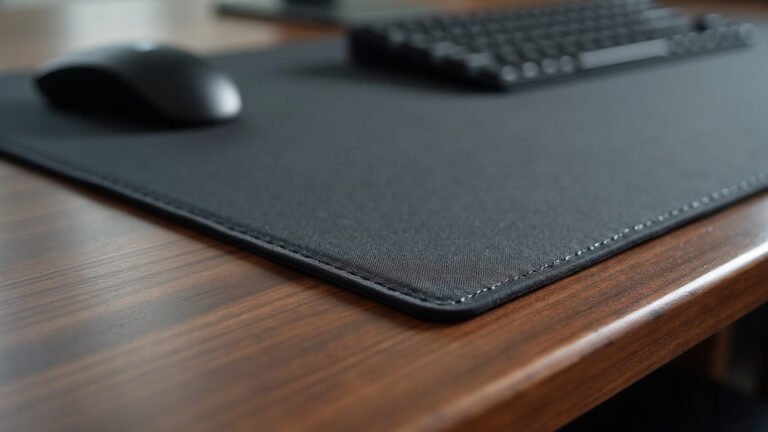
Cheap marketplace pads often cut corners with raw, unstitched edges that fray down to the rubber after their first exposure to water. When you replace it, look for tight anti-fray perimeter stitching and dye-sublimated fabric over a solid 3 mm rubber base. Our desk mats use those exact physical specifications so the print stays locked into the polyester through routine cold-water washing.
Before you run your current mat under the tap, take a thirty-second measurement of your desk surface. If you do end up needing a fresh tracking surface down the line, knowing your exact desk width makes choosing between a 900×400 mm workspace mat and compact mouse pads completely straightforward.
We print every mat to order, which takes between two and five business days before shipping out. Shipping across the United States is always free on every single order, and free worldwide once your cart passes ninety-nine dollars. If your order ever arrives damaged or misprinted, our print guarantee covers a free replacement or full refund within thirty days of delivery with a quick photo. No return shipping required.
For tonight, grab a basin, a few drops of dish soap, and twenty minutes of spare time. Lay your mat flat to dry before going to bed, and you will have a fresh, dust-free surface waiting for your morning setup.
Specifications come from our suppliers’ published data. Where we link to gear we do not make, those links may earn us a commission at no extra cost to you.


Leave a Reply