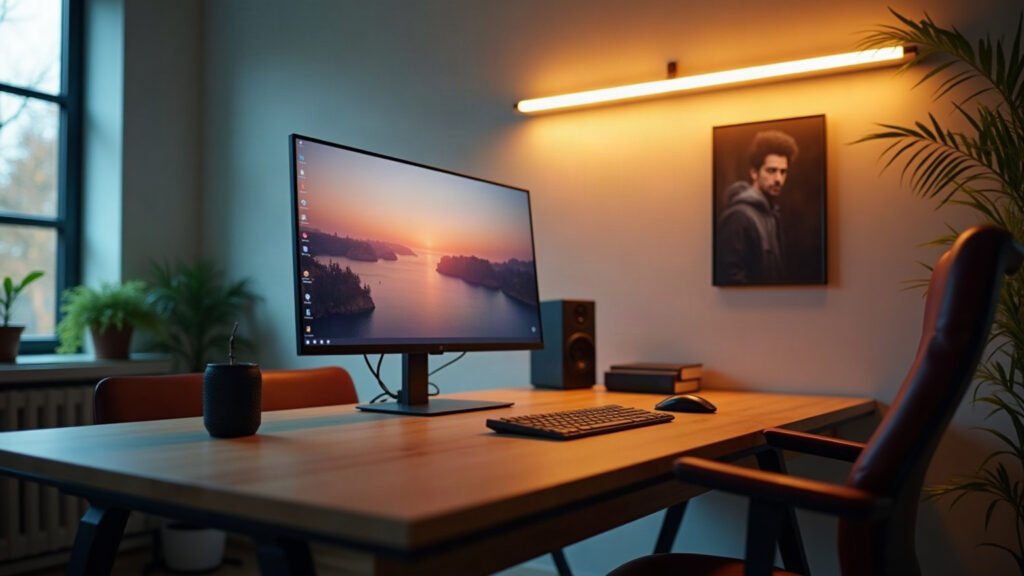
If your room relies on overhead LED downlights, monitor light bars, or bare directional bulbs, choose a matte print finish every time.
Glossy paper requires a controlled, diffused light source positioned outside your viewing angle. The moment a concentrated point of light hits a high-gloss surface, physics works against you. The smooth resin coating acts like a mirror, bouncing the diode’s direct beam into your eyes. You see a blinding white hotspot instead of the artwork beneath it.
Most workspaces and bedrooms built in the last ten years use modern LED fixtures. Understanding how those diodes interact with different paper coatings saves you from hanging art that disappears behind white glare the moment you switch on the lights.
How LED Lighting Interacts with Paper Finishes
Light hits paper in two distinct ways: specular reflection and diffuse reflection. The difference between them determines whether you see deep, clean color or an unreadable shine.
Glossy paper has an ultra-flat, polished coating. When light hits it, the rays bounce off at the exact angle they arrived. This is specular reflection. If your light source is a compact LED fixture with high lumen output, that tiny point source reflects directly back at you with almost zero light scatter. The artwork underneath gets washed out by sheer surface luminance.
Matte paper has microscopic surface texture. That uneven profile scatters incoming light in dozens of directions at once. This is diffuse reflection. Instead of reflecting the harsh LED diode back into the room, the paper absorbs the direct strike and spreads the illumination evenly across the image. The blacks remain dark, the contrast holds steady, and the art stays visible from every corner of your desk.
The Problem with Modern LED Color Temperature
Modern LEDs do not just create sharp focal points. They also produce narrow spectral peaks, particularly in cooler color temperatures between 4000K and 6500K. When cool white light strikes a glossy surface, the resulting glare carries a harsh, blue-tinted specular reflection. This blue cast shifts the perceived color balance of printed pigments.
Matte papers, especially those printed on dense 189 g/m² archival stocks, allow ink pigments to settle naturally into the top paper fibers. The ambient LED light illuminates the pigment directly rather than bouncing off a separate plastic layer on top.
Matte vs Glossy Comparison for Common Lighting Setups
Your room lighting should dictate your print choice before you spend money on custom prints or framing. Use this comparison to match your existing fixtures to the correct finish.
| Lighting Type | Glossy Finish Result | Matte Finish Result | Recommended Choice |
|---|---|---|---|
| Flush-mount ceiling LEDs | Noticeable white flare directly in center viewing zone | Smooth, even visibility across the entire print | Matte |
| Desk monitor light bar | Harsh horizontal reflection strip across art behind monitor | Clean viewing with zero direct line reflection | Matte |
| Directional track spotlights | Intense specular hotspot; unreadable at direct angles | Soft highlight zone without blinding flare | Matte |
| Indirect LED cove / strip lighting | Low glare if strips are hidden behind diffusers | Consistent color saturation and flat appearance | Either |
| Large north-facing window (Daylight) | Deep blacks, high vibrancy, minimal hot reflections | Gentle contrast, no reflection from outdoor light | Glossy or Matte |
When Glossy Paper Still Makes Sense
Glossy prints are not inherently bad. Photographers used them for decades because high-gloss emulsions deliver maximum dynamic range and deep black density, often referred to as high Dmax. Under the right conditions, high-gloss paper produces rich, saturated tones that look wet and sharp.
Those conditions require two things: broad, diffused natural light, and viewing angles perpendicular to the light source. If you have a room lit entirely by large windows with sheer curtains, or indirect floor lamps bouncing light off white drywall, glossy prints can look striking.
However, modern computer setups rarely have that lighting. If you work near a desk with an overhead can light, an LED desk lamp, or an LED strip behind your screen, a glossy print will struggle. You will find yourself shifting your head sideways just to see through the surface shine.
Framing Matters: The Glass Multiplier
Choosing paper finish is only half the battle if you put the print behind glass. Standard acrylic or cheap framing glass turns even a matte print into a reflective surface.
Standard Float Glass vs Anti-Reflective Glass
Standard picture frame glass reflects roughly 8% to 10% of ambient light straight back at the viewer. In an LED-lit room, placing a matte print behind regular float glass cancels out the anti-glare benefits of the paper. If you prefer framed prints, you have three options:
- Use non-glare or museum acrylic: These sheets feature an etched or optical coating that breaks up specular highlights, pairing well with matte paper.
- Hang prints unframed on heavy paper: A thick 189 g/m² matte paper has enough rigidity to hang directly with poster rails or clips, completely eliminating glass glare. Our archival wall art prints use this matte specification so you can hang them bare without surface reflections.
- Use fabric or canvas alternatives: Textured canvas or woven surfaces produce zero specular glare, making them ideal directly beneath recessed ceiling cans.
How to Test Your Room Lighting in 60 Seconds
Before ordering prints for a specific wall, run this quick check using your phone screen:
- Turn on your normal evening room lights, including desk lamps and overhead fixtures.
- Turn off your phone screen so the display is completely black.
- Hold the black phone screen flat against the wall where you plan to hang your artwork.
- Step back to your normal seating or standing position and look at the phone.
If you see clear, sharp outlines of individual LED bulbs reflected on the phone screen, your wall is in a direct specular reflection path. A glossy print on that wall will produce identical glare. If you only see a dim, soft blur, your lighting is diffused enough to handle semi-gloss or satin finishes.
The Tactile Advantage of Matte Surfaces
Surface reflection does not just affect the art on your walls. It also affects the items on your desk. Glossy desk accessories, smooth plastic pads, and polished surfaces reflect overhead task lights right into your peripheral vision throughout the day.
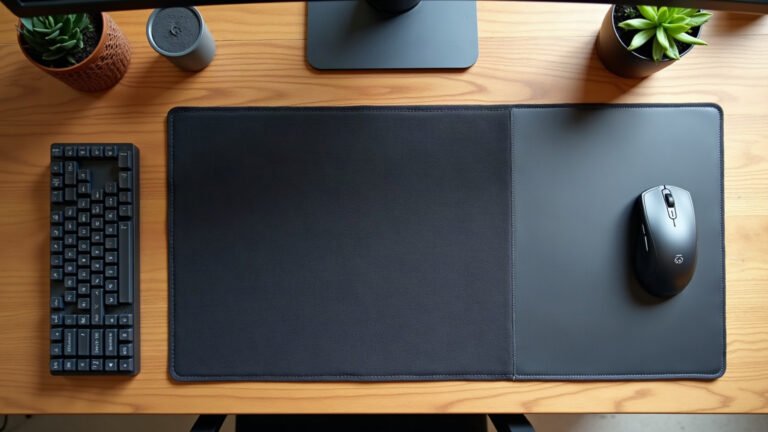
This is why high-density cloth surfaces remain the standard for workspace mats. A tightly woven textile base absorbs light while providing consistent friction for mouse sensors. If you want to cut down on reflections across your actual desk surface, our textured desk mats provide an anti-glare base that handles direct overhead LED illumination cleanly.
Choosing the Right Finish for Your Space
The first week you replace a high-glare print with a heavy matte surface, you will catch yourself looking at the artwork instead of dodging reflections. The image remains visible whether your desk lamp is at full brightness or dimmed for the evening.
Take a minute to check the angle of your nearest ceiling fixture or monitor lamp. If that light source sits in front of your display wall, choose matte. You get pure color, full detail from every angle, and zero distracting glare.
All our prints ship free across the United States, with flat-rate shipping from $7.95 worldwide and free global delivery on orders over $99. Every print is backed by our 30-day print guarantee: if your item arrives damaged, misprinted, or faulty, send us a photo and we will replace it or issue a full refund immediately.
Specifications come from our suppliers’ published data. Where we link to gear we do not make, those links may earn us a commission at no extra cost to you.

Leave a Reply